


Key Takeaways
- California Civil Code 1965 requires landlords to store tenant belongings for at least 18 days before disposal—rushing this creates legal liability.
- Written notice must be mailed AND delivered to the tenant’s last known address before you can legally dispose of anything.
- Items valued over a certain threshold may require public auction rather than donation or disposal.
- Professional haul-away services in Orange County can handle compliant disposal once the waiting period ends, documenting everything for your records.
- Most landlords underestimate how much stuff tenants leave behind—a full-truck cleanout is common for studio and one-bedroom units.
I’ve hauled out more abandoned tenant belongings than I can count across Orange County. From Irvine apartment complexes to single-family rentals in Mission Viejo, the story is remarkably consistent: tenant leaves, landlord discovers furniture, boxes, and random stuff scattered everywhere, and then the landlord asks us to come haul it away immediately. Here’s the problem—California law doesn’t let you do that. At least not right away.
Before we load a single item, you need to understand what the state requires. Getting this wrong can cost you far more than the cleanout itself.
What Does California Law Actually Require for Abandoned Tenant Property?
California Civil Code Section 1965 governs how landlords must handle belongings left behind after a tenancy ends. The law creates a mandatory waiting period, requires written notice to the former tenant, and sets different rules depending on the estimated value of what was left behind. Skipping any of these steps exposes you to liability.
The waiting period is where most landlords trip up. After the tenant vacates—whether through lease expiration, abandonment, or eviction—you must store their belongings for a minimum of 18 days. During this time, the former tenant has the right to claim their property by paying reasonable storage costs.
You’re also required to send written notice. This notice must describe the property left behind, state where it’s being stored, and explain how the tenant can reclaim it. The notice needs to be mailed to the tenant’s last known address and, if different, to any forwarding address you have on file.
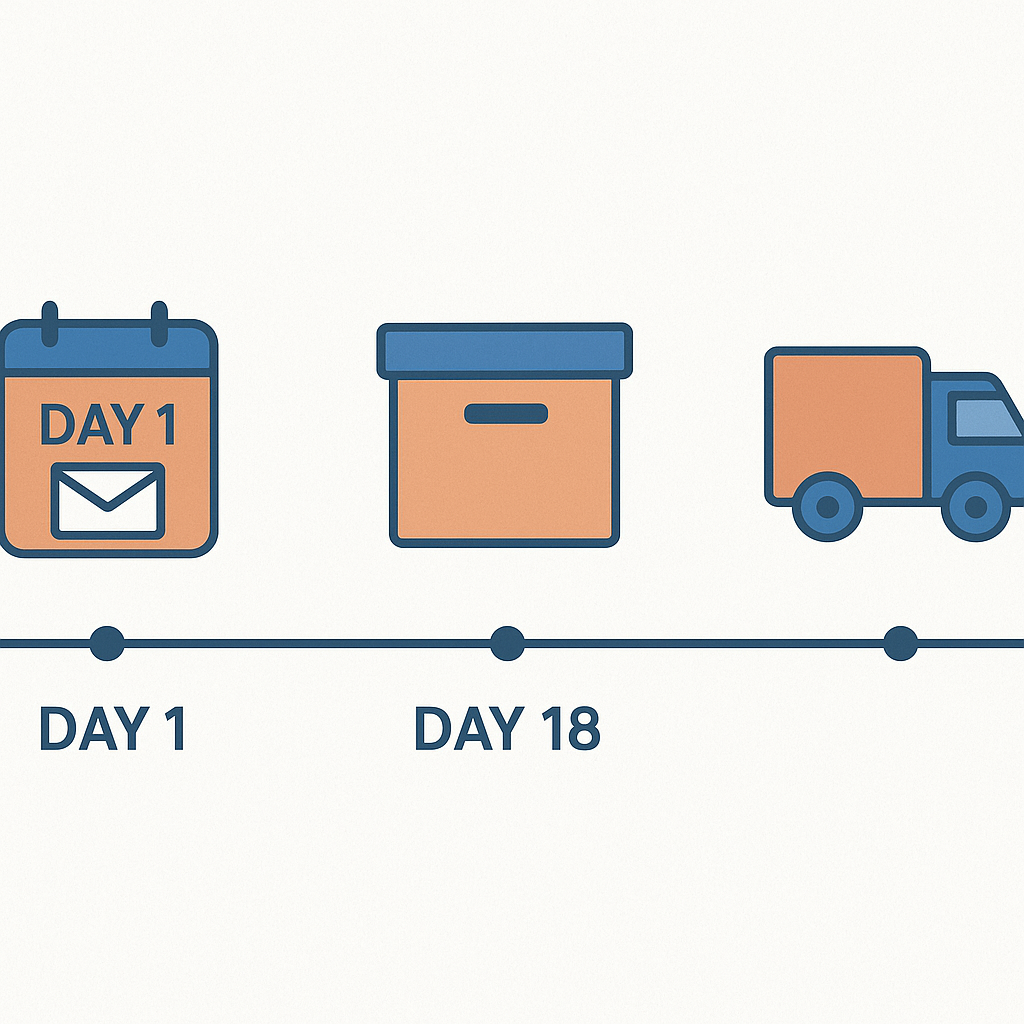
Why the 18-Day Rule Creates Real Problems for Orange County Landlords
Eighteen days doesn’t sound like much until you’re losing rental income on a vacant unit in Huntington Beach or Newport Beach. Every day that unit sits full of someone else’s belongings is a day you can’t show it, clean it, or move a new tenant in. The law doesn’t care about your mortgage payment—it cares about protecting the former tenant’s property rights.
Storage becomes another headache. If the unit itself is the storage location, you’re essentially giving the former tenant free storage for 18 days while you wait. Some landlords move everything to a garage or storage unit, which is allowed, but creates additional handling and documentation requirements.
Property managers in Irvine and Laguna Niguel have told me they’ve had former tenants show up on day 17 to reclaim items—sometimes just the valuable stuff, leaving the junk behind. Legally, you have to let them take what they claim. Then you start the clock over for whatever remains if there’s any question about what was actually abandoned versus what was reclaimed.
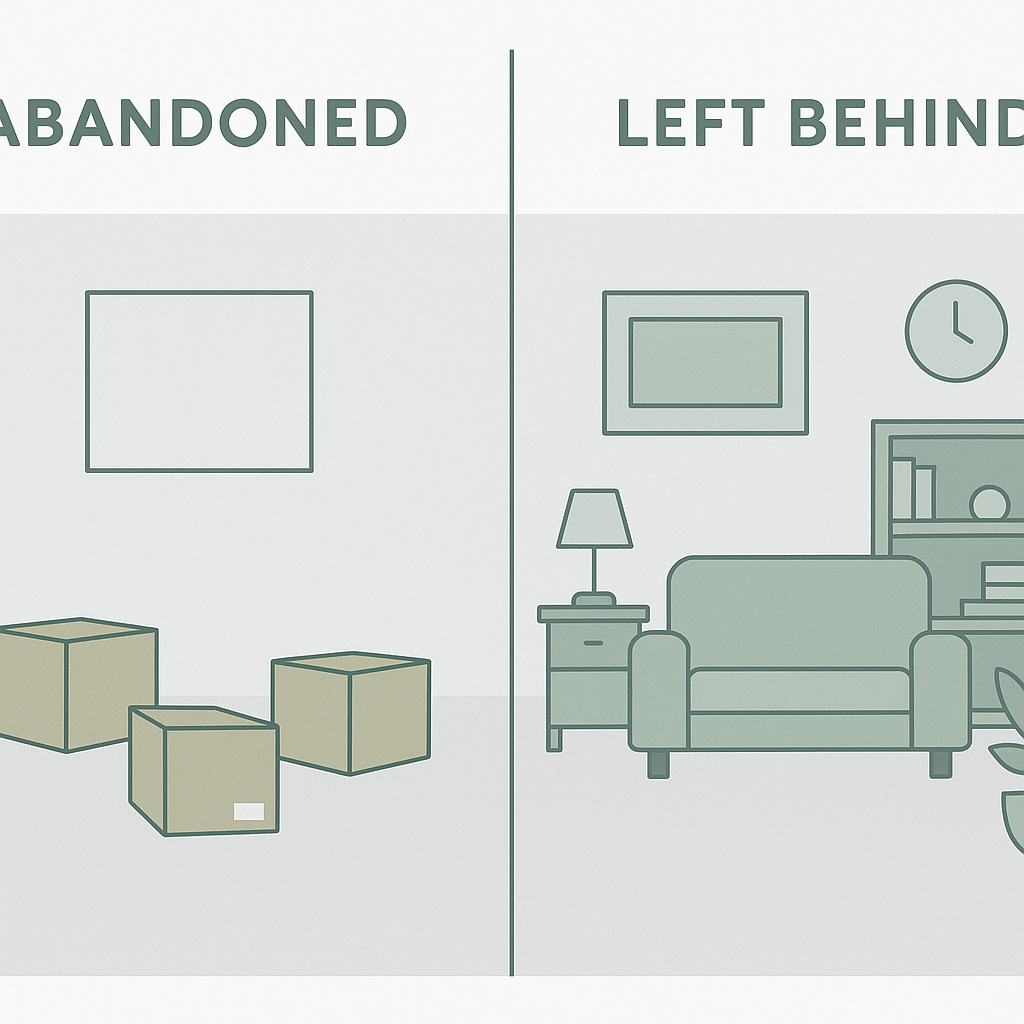
What Counts as “Abandoned” vs. “Left Behind”?
This distinction matters more than most landlords realize. Property is considered abandoned when the tenant has clearly vacated with no intention to return and has left belongings behind. Property is merely “left behind” when there’s any ambiguity about the tenant’s status or intentions. The legal requirements apply to both, but ambiguity creates risk.
Clear abandonment scenarios include: tenant gave written notice and move-out date has passed, tenant was legally evicted and lockout has occurred, or tenant disappeared and you’ve followed proper abandonment procedures. In these cases, the 18-day notice period applies straightforwardly.
Ambiguous situations get complicated. If a tenant stopped paying rent but still has belongings inside and you haven’t completed formal eviction, you generally can’t touch their stuff. Similarly, if someone was living there under unclear arrangements—a roommate not on the lease, for example—the abandoned property rules may not apply the same way.
When Can You Finally Call for Haul-Away?
Once the 18-day notice period expires and the tenant hasn’t reclaimed their belongings, you have options. Items valued under a certain threshold can be kept, sold, donated, or disposed of at your discretion. Higher-value items may require public auction—check current California statute thresholds or consult with a property attorney to determine what applies to your situation.
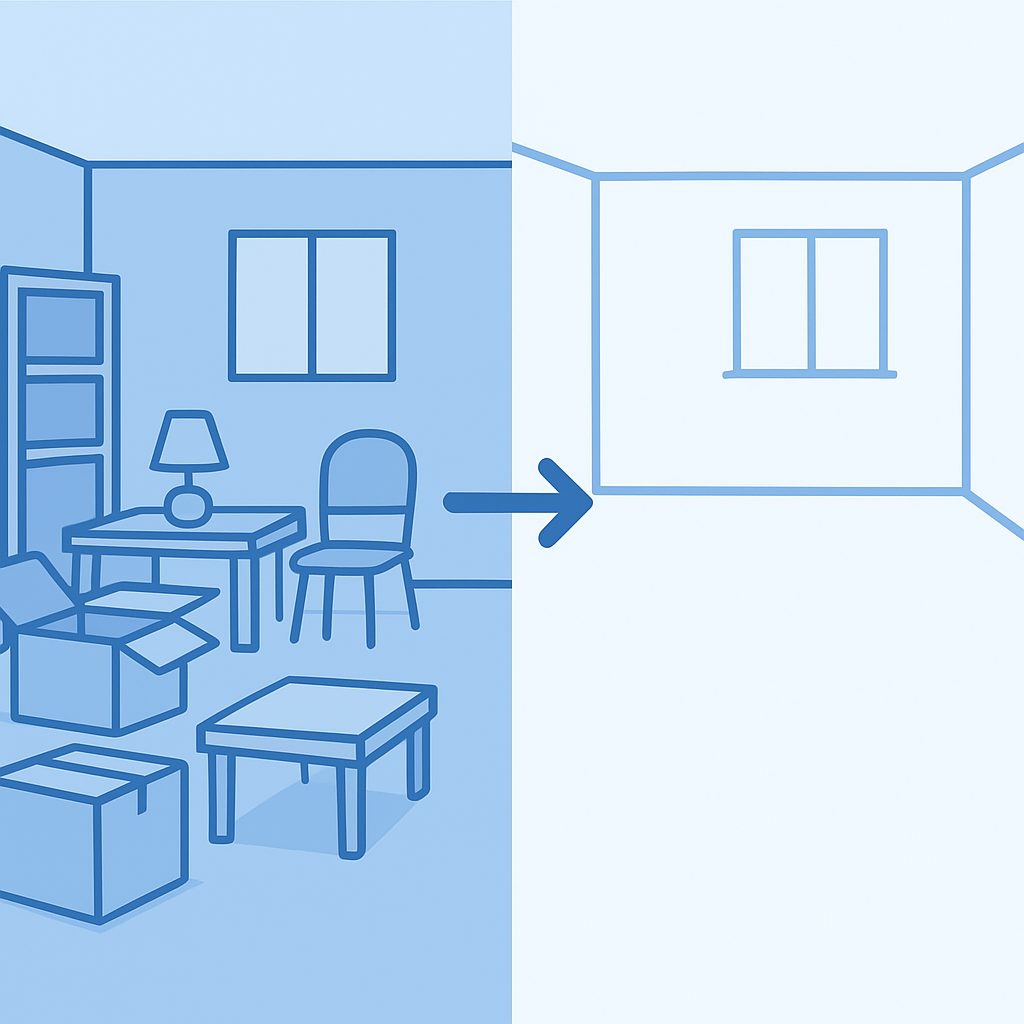
This is where we come in. After you’ve followed the legal requirements, our team can handle the actual haul-away service in Orange County—loading everything, transporting it, and ensuring proper disposal or donation. We document what we remove, which gives you records if any questions arise later.
Most tenant cleanouts fill at least half a truck. Studios and one-bedrooms often produce a full-truck load once you factor in furniture, mattresses, random boxes, and accumulated household items. Larger units or situations where tenants lived there for years can require multiple trips.
What About Items That Clearly Have No Value?
Actual garbage—spoiled food, broken items, obvious trash—doesn’t require the same notice period as potentially valuable belongings. However, I’d encourage landlords to be conservative about what they classify as garbage. A broken lamp might seem worthless to you, but if the tenant claims it was a family heirloom, you’ve created a dispute.
Document everything with photos before you dispose of anything, even obvious trash. Date-stamped photos establish what was there and its condition. This protects you if claims arise later.

How Professional Junk Removal Helps After the Waiting Period
Once you’re legally clear to dispose of belongings, speed matters. You want that unit back on the market. Our crews can typically schedule junk removal in Orange County within a day or two, sometimes same-day depending on availability.
We handle the heavy lifting—literally. Mattresses, couches, dressers, box springs, appliances left behind, bags of clothing, boxes of random household items. Everything gets loaded, sorted, and either donated (when items are in good enough condition) or properly disposed of.
For landlords managing multiple properties, we can set up recurring arrangements. Turnovers happen regularly in the rental business, and having a reliable haul-away service on call means faster unit turns and less time dealing with the logistics yourself.
Ready to clear out a unit after the notice period expires? Schedule a free estimate and we’ll give you an honest assessment of what the cleanout will involve.
Frequently Asked Questions
Can I throw away tenant belongings immediately after they move out?
No. California law requires you to store belongings for at least 18 days and send proper written notice before disposal. Throwing items away immediately—even after a formal eviction—can expose you to liability for the value of those belongings. Follow the notice requirements first, then schedule removal.
What if the tenant left obviously valuable items like electronics or jewelry?
Higher-value items may require public auction rather than simple disposal or donation. California statute sets value thresholds that determine your obligations. When in doubt, document everything with photos and consult a property attorney before disposing of anything that appears valuable.
Do I have to store tenant belongings on the property?
Not necessarily. You can move belongings to another storage location, but you must inform the tenant where items are stored in your written notice. Keep records of any moving or storage costs, as you can require reimbursement before releasing items to the tenant if they reclaim them.
How much does tenant cleanout cost in Orange County?
Cleanout costs depend on volume—how much space the items take in our truck—plus factors like stairs, access, and whether items are already boxed or scattered throughout the unit. Most one-bedroom tenant cleanouts in Orange County involve at least a half-truck load. We provide free estimates before any work begins.
What happens to the stuff after you haul it away?
Items in good condition go to local donation partners when possible. Mattresses, broken furniture, and actual trash get disposed of at licensed facilities. We sort as we load so landlords don’t have to worry about what goes where—we handle the entire process from loading through disposal.
Can you help with emergency cleanouts if a tenant abandoned mid-lease?
We can schedule quickly once you’ve completed the legal notice requirements. If you’re still in the 18-day waiting period, we can provide an estimate and get you on the calendar for the day after the period expires. That way, you’re ready to move fast once you’re legally clear.
Have a unit that needs clearing? Call us at (714) 769-5070 to discuss your situation and schedule your cleanout.
About the Author
Chris — Founder & Owner, United Junk Removal
Chris is the founder and owner of United Junk Removal, a locally owned Orange County junk removal company. A longtime Orange County resident, Chris spent years working in mortgage lending, debt consolidation, and financial restructuring before launching United Junk Removal with a single truck and a commitment to exceptional customer service. Today, the company serves homeowners and businesses throughout Orange County and is expanding into residential moving services. Chris writes about junk removal, moving, property cleanouts, and home service best practices based on his hands-on experience helping customers throughout Southern California.
One Response