


Key Takeaways
- Sheds accumulate weather-damaged items, pest nests, and hazardous chemicals that indoor storage doesn’t—plan for disposal challenges before you start sorting.
- Orange County’s mild winters make November through February the ideal window for shed cleanouts, avoiding summer heat and pre-holiday rush.
- Fertilizers, pool chemicals, and old paint from sheds require special disposal routes—they can’t go in the truck without proper handling.
- A systematic approach (empty completely, sort outside, return only what earns its space) beats the “shuffle things around” method every time.
- Most homeowners underestimate shed volume by half; what looks like “a few boxes” often fills a quarter-truck once everything comes out.
Sheds are where good intentions go to rust. That leaf blower you meant to fix, the camping gear from three summers ago, the pool floats that might still hold air—all of it piles up behind that door you stopped opening. We haul out Orange County sheds every week, from compact garden sheds in Laguna Niguel to full-size backyard workshops in Yorba Linda. Here’s how to tackle yours without losing a weekend or your sanity.
Why Are Shed Cleanouts Different From Garage or Attic Jobs?
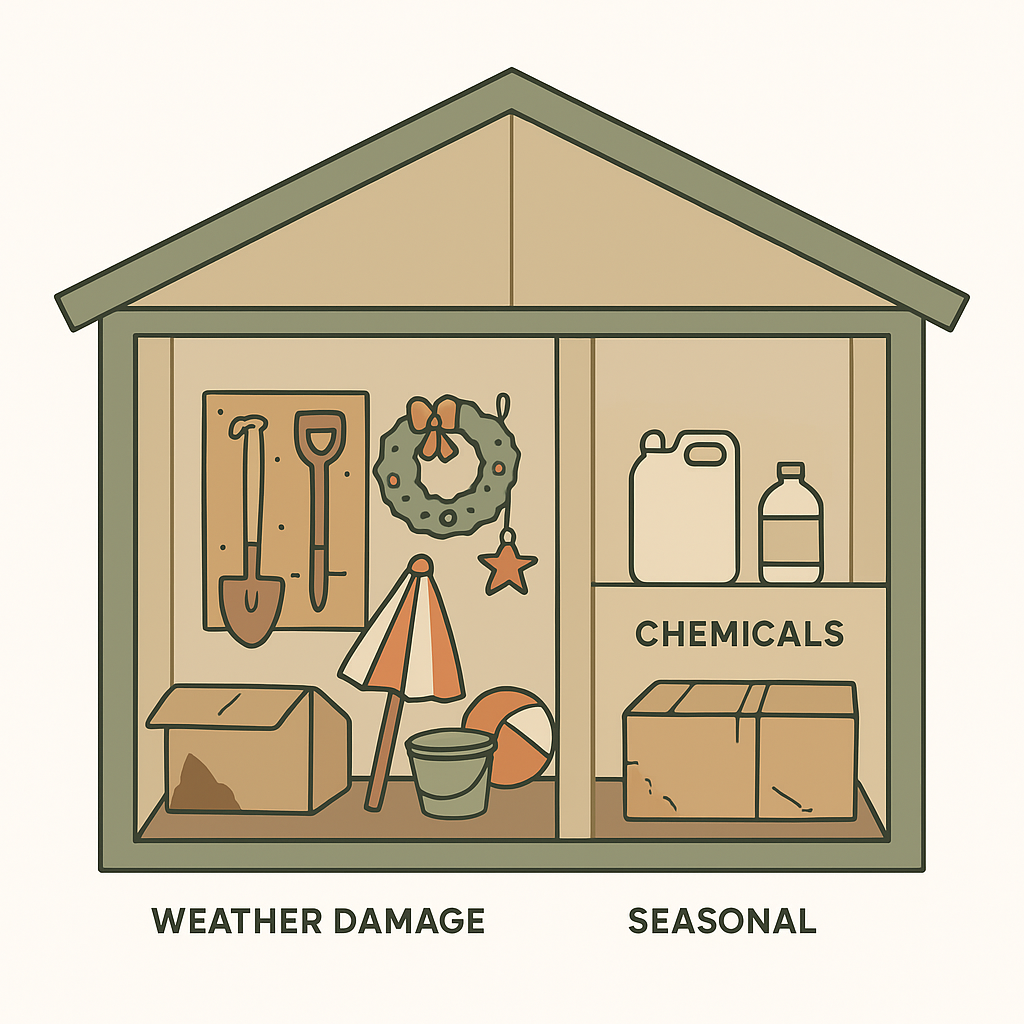
Outdoor sheds face weather, pests, and moisture that indoor spaces don’t. This means rust, rodent damage, and deteriorated materials that complicate both sorting and disposal. What worked for your garage cleanout won’t translate directly to the shed.
Sheds sit exposed to OC’s coastal humidity and summer heat cycles. Metal tools corrode. Cardboard boxes collapse. Rubber seals on equipment crack and fail. We regularly find items that looked fine through a dirty window but crumble when touched. That’s not your fault—it’s just what happens when stuff lives outside for years.
Rodents love sheds. They’re warm, undisturbed, and often contain birdseed, fertilizer, or pet food. Expect to find nesting materials, droppings, and chewed-through containers. This matters for disposal because contaminated items need different handling than clean junk.
What’s Actually in Most Orange County Sheds?
After clearing hundreds of sheds across Mission Viejo, Costa Mesa, Dana Point, and surrounding cities, we’ve seen patterns emerge. Knowing what to expect helps you plan your approach.
Lawn and Garden Equipment
Mowers, trimmers, edgers, and blowers—often multiples because the old one “might still work.” Gas-powered equipment with stale fuel creates disposal complications. We can haul the equipment, but fuel needs to be drained first or taken to a household hazardous waste facility.
Seasonal Gear Cycling Through
Pool toys in winter, holiday decorations in summer, camping gear year-round. Much of it deteriorates between seasons. Inflatable items develop leaks. Fabric chairs mildew. Christmas lights tangle into unsalvageable knots. Be honest about whether these items have actually been used in the past two years.
Chemicals and Hazardous Materials
This is where shed cleanouts get complicated. Fertilizers, pesticides, pool chlorine, old gasoline, paint thinner, and motor oil accumulate in sheds because homeowners don’t know where else to put them. California law requires specific disposal for these materials—they can’t go in regular trash, and we can’t load them without knowing what we’re handling.
Orange County Household Hazardous Waste facilities accept these materials for free from residents. We can haul everything else, but chemical disposal needs to happen through proper channels.
When Should You Schedule a Shed Cleanout in Orange County?
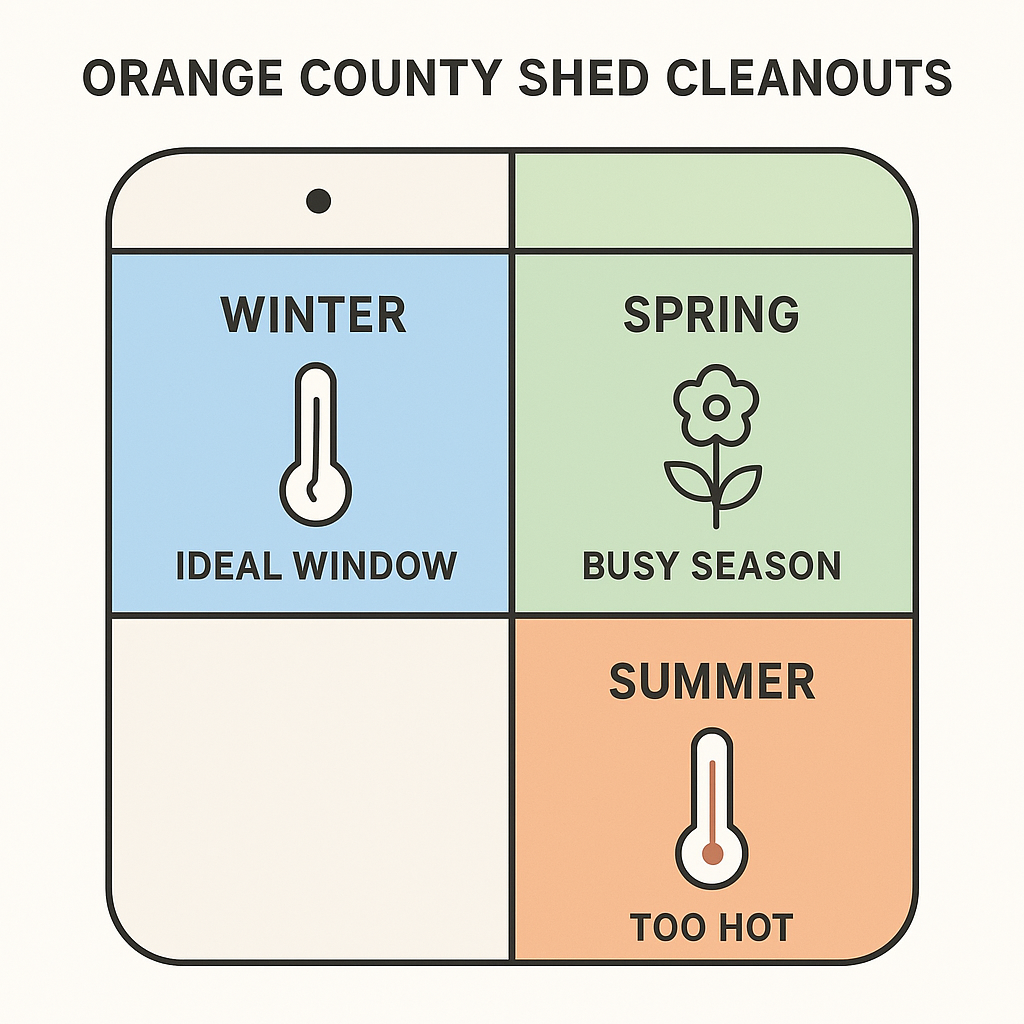
Timing matters more for sheds than indoor cleanouts. The best window in Orange County runs from November through February—mild temperatures, less demand on haulers, and you’ll finish before spring planting season.
Summer shed cleanouts are brutal. Metal structures trap heat, temperatures inside can exceed 110 degrees, and you’ll exhaust yourself before finishing the sort. We’ve had customers in Rancho Santa Margarita and Lake Forest push their shed projects to fall after attempting summer starts. Smart move.
Spring brings “I should clean the shed before summer” energy, but that’s also when every other homeowner has the same idea. Scheduling gets tighter. If you want a specific day, book early or consider the November window when our crews have more flexibility.
The Step-by-Step Process That Actually Works
After watching customers struggle with shed cleanouts, we’ve identified what separates projects that finish from those that stall. The key is complete extraction before any sorting begins.
Step One: Empty Everything
Pull every item out of the shed onto the lawn or driveway. This feels excessive, but it works. You can’t evaluate what you have while items remain stacked and shadowed inside. Once everything sits in daylight, decisions become clearer.
Step Two: Clean the Empty Shed
Sweep out debris, check for rodent evidence, and assess the structure itself. Sometimes the shed needs repairs before items go back in. Sometimes the shed itself is the junk—we’ve hauled away entire collapsed structures in Dana Point and San Clemente.
Step Three: Sort Into Three Zones
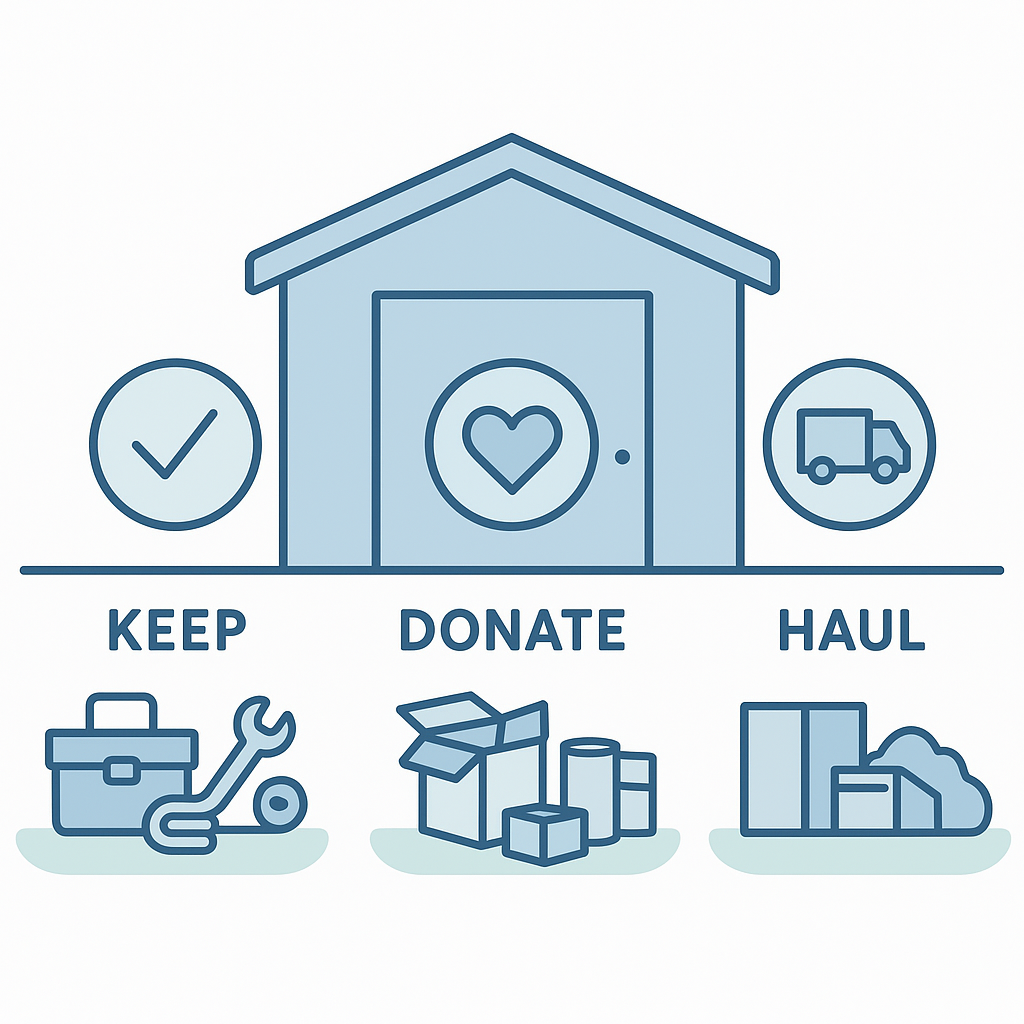
Create physical areas for Keep, Donate, and Haul Away. Everything goes to one zone—no “maybe” pile, no “I’ll decide later” stack. The maybe pile is where shed cleanouts go to die. Make a decision and place the item.
Step Four: Return Only What Earns Space
Before anything goes back in the shed, ask: Have I used this in the past year? Will I realistically use it in the next year? Does it work properly? If you can’t answer yes to all three, it belongs in the Donate or Haul zone.
What Happens to Your Shed Junk After We Load It?
When we haul away shed contents, items take different routes based on condition. Functional tools and equipment head to donation partners. Scrap metal goes to recycling. True junk goes to the landfill. We sort on-site when possible because it affects where things end up.
Certain items from sheds require special handling. Old gas cans, even empty ones, need proper processing. Pesticide containers follow hazardous waste protocols. Treated lumber from decking or garden beds can’t go in regular disposal streams in California.
If you’re curious about where your stuff actually goes after we haul it away, we’re transparent about the process. Most shed cleanouts involve a mix of donation, recycling, and landfill—rarely is everything pure trash.
How to Prepare Before the Haul-Away Crew Arrives
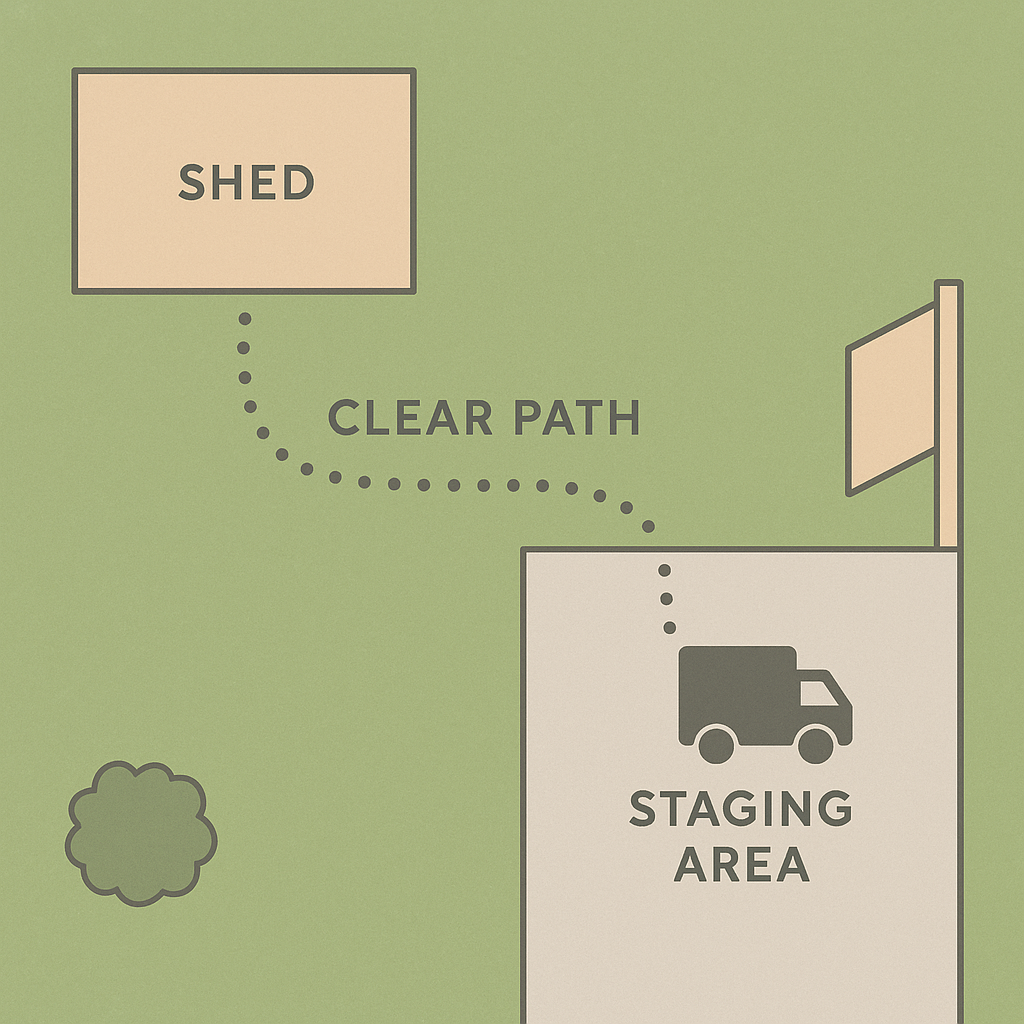
A little prep on your end makes the job faster, which often means lower cost. Clear a path from the shed to where our truck can park. If items need to travel through a side gate, make sure it opens fully and nothing blocks the route.
Separate out hazardous materials before we arrive. We need to know what’s in unlabeled containers. If you’re not sure what’s in a can or bottle, don’t guess—set it aside and we’ll discuss options. Some chemicals we simply can’t load due to transport regulations.
For large or heavy items like riding mowers, assembled shelving, or old hot tub equipment that migrated to the shed, point these out when you schedule your estimate. Weight and bulk affect how we plan the load.
Frequently Asked Questions
How much does a shed cleanout typically cost in Orange County?
We price by truck volume rather than item count. Most shed cleanouts fill between a quarter and half truck, depending on how much has accumulated. We provide free estimates on-site so you know the cost before we load anything. No surprises.
Can you haul away the shed itself, not just the contents?
Yes, we remove entire shed structures when they’re beyond repair or the homeowner wants the space back. Wooden sheds break down relatively easily. Metal sheds take more work but still come apart. We’ve cleared collapsed and standing structures throughout Orange County.
What if I have old gasoline or pesticides in the shed?
These qualify as household hazardous waste under California regulations. Orange County operates free drop-off facilities for residents. We can haul everything else while you handle chemical disposal separately, or we can advise on timing so you clear chemicals before our arrival.
How long does a typical shed cleanout take?
For the hauling portion, most shed cleanouts take 30-60 minutes once we arrive. If you’ve pre-sorted into keep/haul piles, the process moves faster. The sorting phase—which you do before we arrive—typically takes homeowners 2-4 hours depending on volume.
Do I need to be home during the shed cleanout?
We prefer you’re present for the estimate and to confirm what goes. After that, if the shed is accessible from outside and you’ve clearly marked what stays, some customers leave us access and handle the job while they’re at work. Just discuss this during scheduling.
What happens to usable tools or equipment from my shed?
Functional items get donated to local organizations that can use them. We work with partners who accept working tools, sporting goods, and garden equipment. Anything with resale or reuse value stays out of the landfill when possible.
Ready to finally open that shed door and deal with what’s behind it? Schedule a free estimate and we’ll tell you exactly what we can haul and what needs separate handling. Or call us at (714) 769-5070 if you want to talk through your specific situation first.
About the Author
Chris — Founder & Owner, United Junk Removal
Chris is the founder and owner of United Junk Removal, a locally owned Orange County junk removal company. A longtime Orange County resident, Chris spent years working in mortgage lending, debt consolidation, and financial restructuring before launching United Junk Removal with a single truck and a commitment to exceptional customer service. Today, the company serves homeowners and businesses throughout Orange County and is expanding into residential moving services. Chris writes about junk removal, moving, property cleanouts, and home service best practices based on his hands-on experience helping customers throughout Southern California.