


Key Takeaways
- California mandates that 65% of construction and demolition debris be diverted from landfills through recycling or salvage.
- Orange County projects over a certain size require a Waste Management Plan filed with your city before permits issue.
- Hazardous materials like asbestos, lead paint, and treated lumber have entirely separate disposal chains—mixing them with regular debris creates legal exposure.
- Property owners carry ultimate liability for improper disposal, even when a contractor handles the work.
- Licensed haulers document diversion rates and provide manifests that protect you if questions arise later.
After years of hauling construction debris across Orange County, I’ve watched homeowners get blindsided by disposal rules they never knew existed. The contractor finishes the kitchen demo, loads everything into a truck, and drives away. Six months later, the homeowner gets a letter from the city asking about their diversion documentation. That’s the moment they learn California doesn’t treat construction waste like regular trash—and the responsibility lands on whoever owns the property.
What Does California Actually Require for Construction Debris?
California’s construction debris rules center on one core mandate: keep reusable and recyclable materials out of landfills. CalRecycle requires that at least 65% of construction and demolition waste be diverted through recycling, salvage, or reuse. This applies to new construction, renovations, and demolition projects throughout Orange County—from major builds in Irvine to bathroom remodels in Newport Beach.
The rules exist because construction debris makes up roughly 25% of California’s total waste stream. Concrete, lumber, metal, drywall, and roofing materials all have secondary markets. Regulators decided decades ago that burying reusable resources wasn’t acceptable policy.
For homeowners, this means any contractor working on your property should be routing debris through facilities that sort and recover materials. A truck driving straight to the landfill with mixed demo waste likely violates state requirements—and as the property owner, that violation traces back to your address.

When Do You Need a Waste Management Plan in Orange County?
Most Orange County cities require a Construction and Demolition Waste Management Plan for projects that generate significant debris. The threshold varies by city, but typically kicks in when a project involves more than a few hundred square feet of demolition or generates over a certain weight of material.
In cities like Mission Viejo and Laguna Niguel, you’ll file this plan when applying for your building permit. The plan documents how you’ll achieve the 65% diversion requirement—which facilities you’ll use, which materials you’ll separate on-site, and who will haul the debris. After the project, you submit receipts and weight tickets proving you hit the target.
Smaller projects often fly under the permit radar, but the diversion requirement still technically applies. Whether you’re renovating a condo in Costa Mesa or clearing a garage in Yorba Linda, California law expects construction materials to be handled properly. The difference is enforcement—permitted projects get checked, while smaller jobs rely on contractor integrity.
This is where the disconnect happens. Homeowners assume their contractor handles compliance automatically. Contractors assume the homeowner understands they’re cutting corners to save on disposal costs. Nobody discusses it until something goes wrong.
Hazardous Materials Change Everything
Standard construction debris rules assume you’re dealing with inert materials—concrete, wood, metal, drywall. The moment hazardous materials enter the picture, an entirely separate regulatory framework takes over.
Homes built before 1978 may contain lead paint. Structures from certain eras used asbestos in insulation, flooring, and ceiling materials. Pressure-treated lumber contains chemicals that don’t belong in standard recycling streams. Even seemingly innocent items like fluorescent light fixtures contain mercury.
These materials require specialized handling, separate transportation, and disposal at facilities licensed to accept hazardous waste. Mixing them with regular construction debris contaminates the entire load—meaning nothing can be recycled and the whole batch requires special disposal at significant cost.
Before any renovation or demolition project, especially in older Orange County homes, testing makes sense. Knowing what you’re dealing with upfront prevents the nasty surprise of discovering asbestos tile after someone already broke it apart and spread fibers everywhere.

Who Carries Liability When Disposal Rules Break?
Here’s the reality that surprises most homeowners: liability for improper construction debris disposal flows uphill to the property owner. Your contractor may have physically dumped materials illegally, but regulators and environmental agencies often pursue the person who owned the property and generated the waste.
This isn’t theoretical. I’ve spoken with homeowners who hired cheap contractors, watched them haul debris away, and then received enforcement letters months later when illegal dump sites got traced back to their renovation projects. Cleanup costs, fines, and legal fees landed on the homeowner—not the guy who actually did the dumping.
From my years in financial restructuring before starting this company, I learned that documentation is the only real protection. When you hire a licensed hauler who can show where your materials actually went, you’ve got a paper trail. Weight tickets, facility receipts, and diversion reports prove compliance. Without that documentation, you’re trusting that whoever took your debris did the right thing.
What Licensed Haulers Do Differently
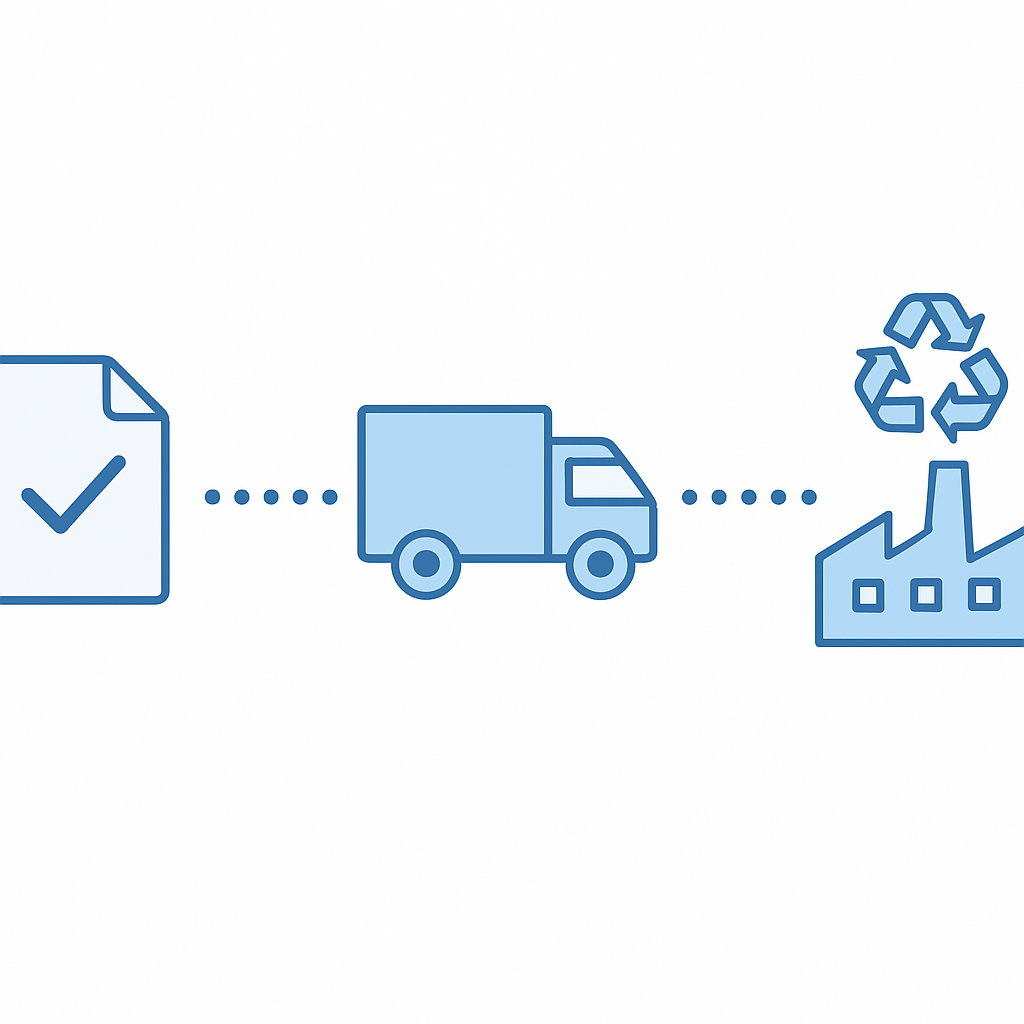
Licensed junk removal companies operating in Orange County maintain relationships with certified recycling facilities and transfer stations. We know which facilities accept which materials, what documentation they provide, and how to route loads for maximum diversion.
When our crew picks up construction debris from a job site, we’re not just loading a truck. We’re sorting as we go—separating concrete from lumber, pulling out metal, setting aside materials that need special handling. At the facility, everything gets weighed and documented. Those records exist if anyone ever asks questions.
This is fundamentally different from the day laborer approach where someone loads debris into a pickup truck and you hope for the best. Beyond insurance and reliability concerns, the disposal chain matters. Where did that material actually go? Can anyone prove it? If you can’t answer those questions, you’re exposed.
For contractors running multiple job sites across Orange County, working with a compliant hauler simplifies their own record-keeping. They get consistent documentation for every load, which satisfies city requirements and protects their contractor’s license.
How to Stay Compliant on Your Next Project
Whether you’re a homeowner managing a renovation or a contractor running job sites, compliance starts with asking the right questions upfront. Before debris leaves your property, know who’s hauling it and where it’s going.
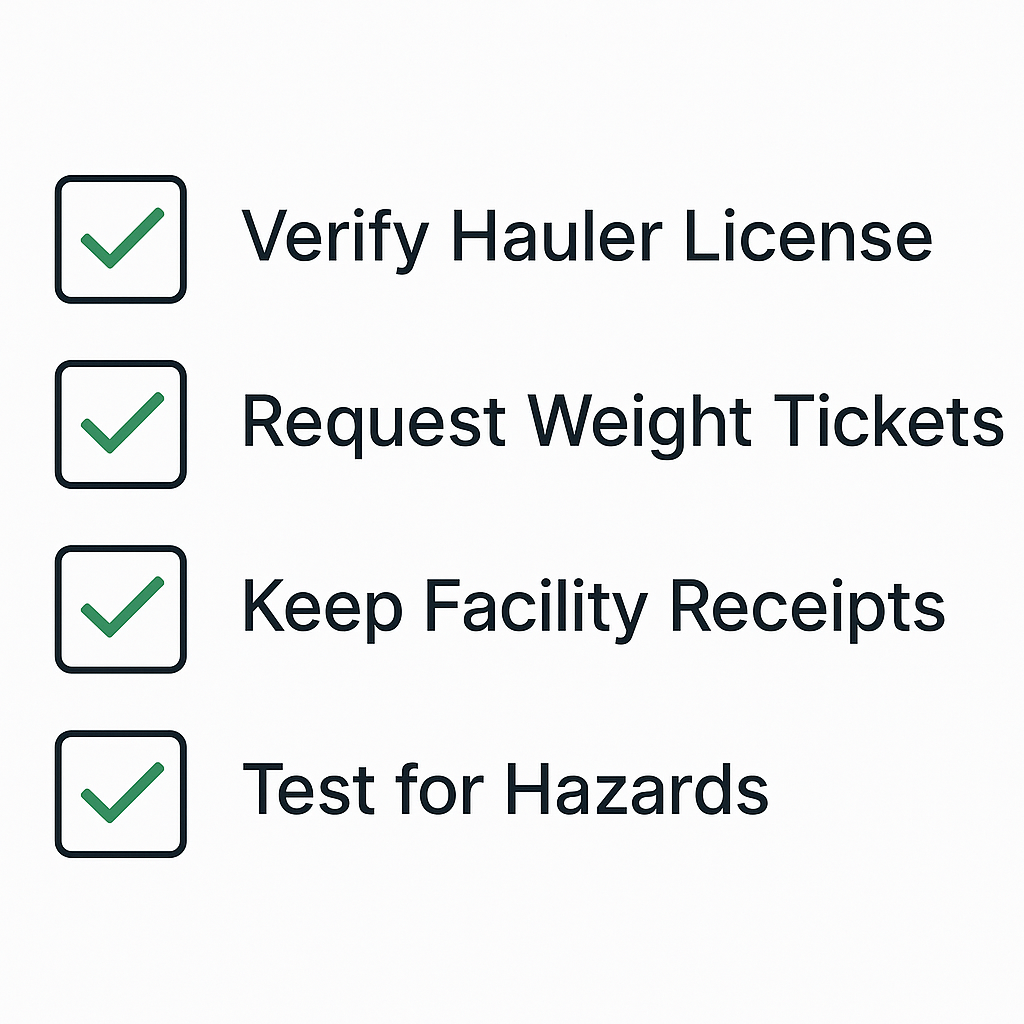
Request documentation after pickup. Any legitimate hauler provides weight tickets and facility receipts. Keep these records with your project files—they’re your proof of compliance if questions arise later.
For larger projects requiring Waste Management Plans, work with your hauler to understand diversion rates at their facilities. Some facilities achieve 80% diversion or higher, which gives you comfortable margin over the 65% requirement.
If your project involves an older structure, get hazardous material testing done before demolition starts. The small upfront cost prevents massive problems if asbestos or lead appears mid-project.
Ready to handle your construction debris the right way? Schedule a free estimate and we’ll walk through exactly how we document diversion for your project.
Frequently Asked Questions
What happens if construction debris is disposed of improperly in California?
Improper disposal can result in fines from local code enforcement and state environmental agencies. Property owners may be held responsible for cleanup costs even if a contractor performed the actual disposal. Repeat violations can escalate to significant penalties and potential legal action.
Do small renovation projects need to follow the same debris rules as major construction?
Technically, yes—the CalRecycle diversion requirement applies regardless of project size. However, enforcement typically focuses on permitted projects that meet city thresholds for Waste Management Plans. Smaller projects still carry liability risk if materials are disposed of illegally.
How do I know if my hauler is disposing of construction debris properly?
Ask for weight tickets and facility receipts after every pickup. Legitimate haulers working with certified facilities can provide documentation showing where materials went and what percentage was diverted from landfill. If a hauler can’t provide paperwork, that’s a red flag.
Can concrete and lumber go in the same load?
They can be transported together, but they’ll be separated at the receiving facility. Different materials go to different recycling streams—concrete gets crushed for aggregate, clean lumber gets processed for mulch or biomass, metal gets recycled separately. Mixed loads require sorting before processing.
What construction materials are considered hazardous in California?
Lead-based paint, asbestos-containing materials, pressure-treated lumber, fluorescent lighting, and certain adhesives and solvents require special handling. These materials must be disposed of through licensed hazardous waste facilities—they cannot go through standard construction debris recycling.
Does the property owner or contractor bear responsibility for proper disposal?
Both can be held liable, but property owners often face primary enforcement because they generated the waste and authorized the project. Contracts should clearly assign disposal responsibility, and property owners should verify compliance through documentation regardless of contractual language.
Questions about construction debris on your upcoming project? Give us a call at (714) 769-5070 and we’ll explain exactly how we handle compliance across Orange County.
About the Author
Chris — Founder & Owner, United Junk Removal
Chris is the founder and owner of United Junk Removal, a locally owned Orange County junk removal company. A longtime Orange County resident, Chris spent years working in mortgage lending, debt consolidation, and financial restructuring before launching United Junk Removal with a single truck and a commitment to exceptional customer service. Today, the company serves homeowners and businesses throughout Orange County and is expanding into residential moving services. Chris writes about junk removal, moving, property cleanouts, and home service best practices based on his hands-on experience helping customers throughout Southern California.