


Key Takeaways
- California law (SB 20) bans “covered electronic devices” from regular trash—violations can result in fines for both homeowners and haulers.
- Free e-waste collection events and retailer take-back programs exist throughout Orange County, but availability and accepted items vary significantly.
- Batteries require separate handling: lithium-ion batteries are fire hazards at transfer stations and cannot go in any curbside bin.
- When e-waste shows up during a cleanout, legitimate junk removal companies must separate it from the main load for proper recycling.
- The “free” e-waste pickup services often cherry-pick valuable items and may not handle everything you need removed.
Here’s something I learned quickly after starting United Junk Removal: every garage cleanout in Orange County seems to include a box of old phones, a dead laptop, and at least one ancient TV that nobody knows what to do with. And California has very specific opinions about where that stuff can—and cannot—go.
Most homeowners know electronics shouldn’t go in the trash. Fewer know it’s actually illegal under state law. Even fewer understand what that means when they’re trying to clear out a Laguna Hills garage or prep an Irvine home for sale. So let’s walk through what the law actually requires and what your real options are.
What Does California Law Actually Require for E-Waste?
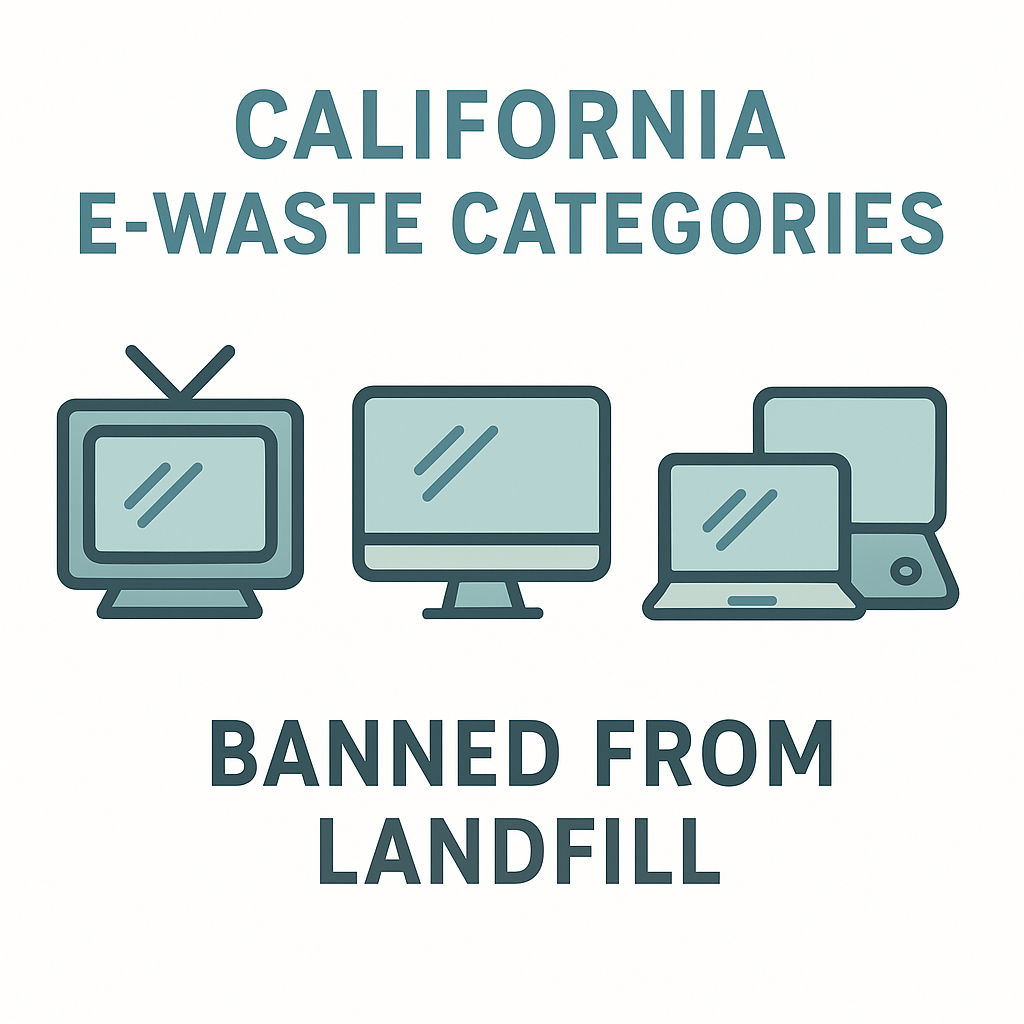
California’s Electronic Waste Recycling Act (SB 20) specifically bans “covered electronic devices” from landfills. These include TVs, computer monitors, laptops, and portable DVD players with screens—basically anything with a display that might contain lead, mercury, or other hazardous materials. Throwing these items in your regular trash isn’t just frowned upon; it’s a violation that can trigger fines.
The law funds recycling through fees collected at purchase. When you bought that TV, you paid a recycling fee upfront. That money supports the certified e-waste collectors and recyclers throughout the state. The system works reasonably well, but it means you can’t just toss electronics in a dumpster and call it done.
Beyond covered devices, you’ve also got universal waste—batteries, fluorescent bulbs, and certain electronics that don’t fall under SB 20 but still can’t go in household trash. The rules overlap in confusing ways, which is why so many people just let this stuff pile up in closets and garages.
Where Can You Take E-Waste in Orange County?
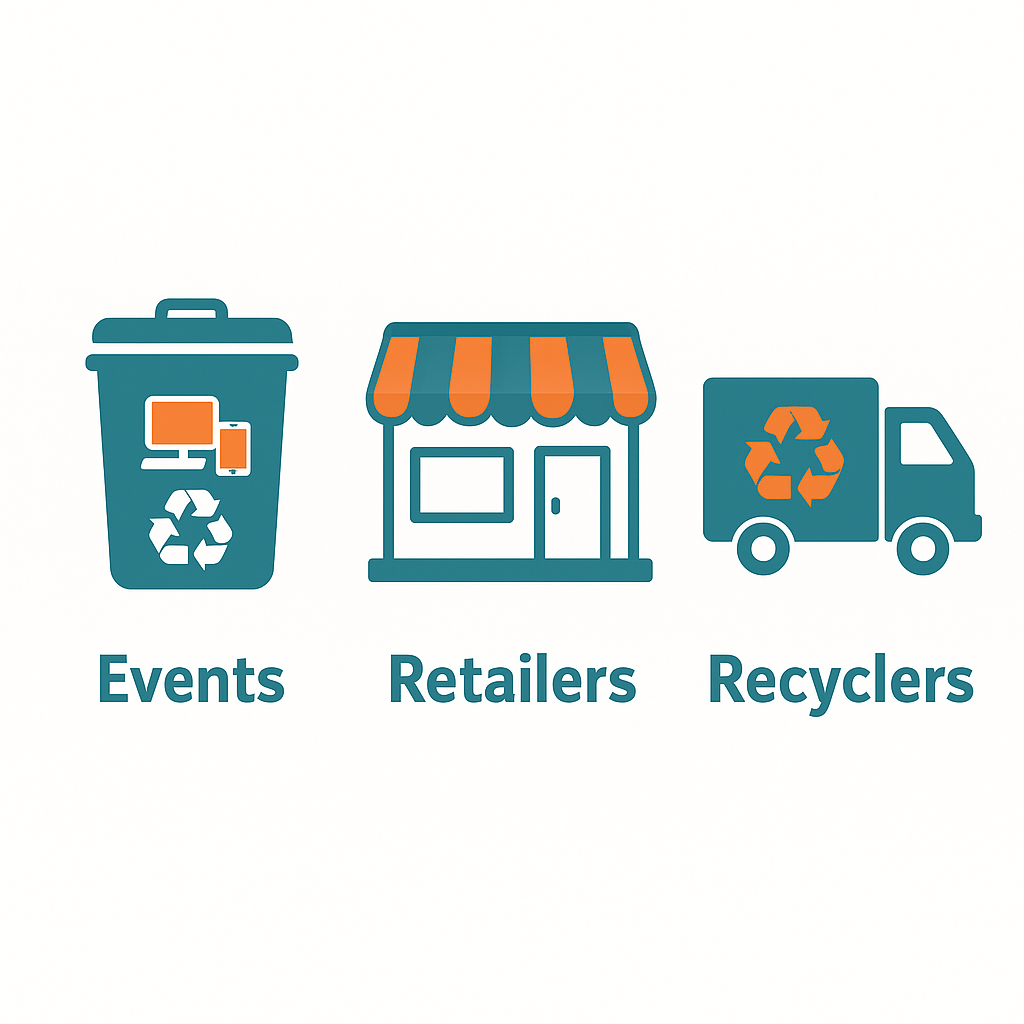
Orange County offers several legitimate disposal routes. Your best option depends on what you’re getting rid of, how much you have, and whether you can transport it yourself. Here’s what’s actually available:
Household Hazardous Waste Collection Events
OC Waste & Recycling runs regular collection events throughout the county. These accept e-waste along with paint, chemicals, and other household hazardous waste. Events rotate through different cities—Mission Viejo, Newport Beach, Yorba Linda, and others. Check the OC Waste website for the current schedule. The catch? You need to show proof of Orange County residency, and events fill up.
Retailer Take-Back Programs
Best Buy accepts most consumer electronics for recycling, including TVs up to 32 inches. Staples takes computers, monitors, and small electronics. These programs work well for smaller items, but they won’t take everything, and you’re limited on quantity per visit.
Certified E-Waste Recyclers
Several certified recyclers operate in Orange County. These facilities accept larger quantities and a wider range of electronics than retailers. Some offer pickup for larger loads. Always verify certification—California maintains a list of approved collectors and recyclers.
What About Batteries? They’re a Separate Problem
Batteries deserve their own discussion because they create unique hazards. Lithium-ion batteries—the rechargeable ones in phones, laptops, power tools, and anything cordless—can catch fire when damaged or punctured. Transfer stations have experienced fires from batteries hidden in trash loads. This is why they’re banned from all curbside collection, including recycling bins.
Standard alkaline batteries (AA, AAA, D-cell) can technically go in household trash in California, but many people prefer to recycle them. Home improvement stores typically have battery collection bins near their entrances. Rechargeable batteries must be recycled—Call2Recycle collection boxes appear at many retailers throughout Costa Mesa, Lake Forest, and other OC cities.
When we encounter batteries during a cleanout, we separate them immediately. Mixed in with general debris, they become a fire risk in our truck and at the transfer station. Legitimate haulers handle this separation as standard practice.
How Junk Removal Handles E-Waste in Mixed Loads
Here’s where things get practical for most homeowners. You’re not clearing out just e-waste—you’re clearing out a garage full of everything. Old furniture, boxes of clothes, broken appliances, and yes, a pile of dead electronics in the corner.
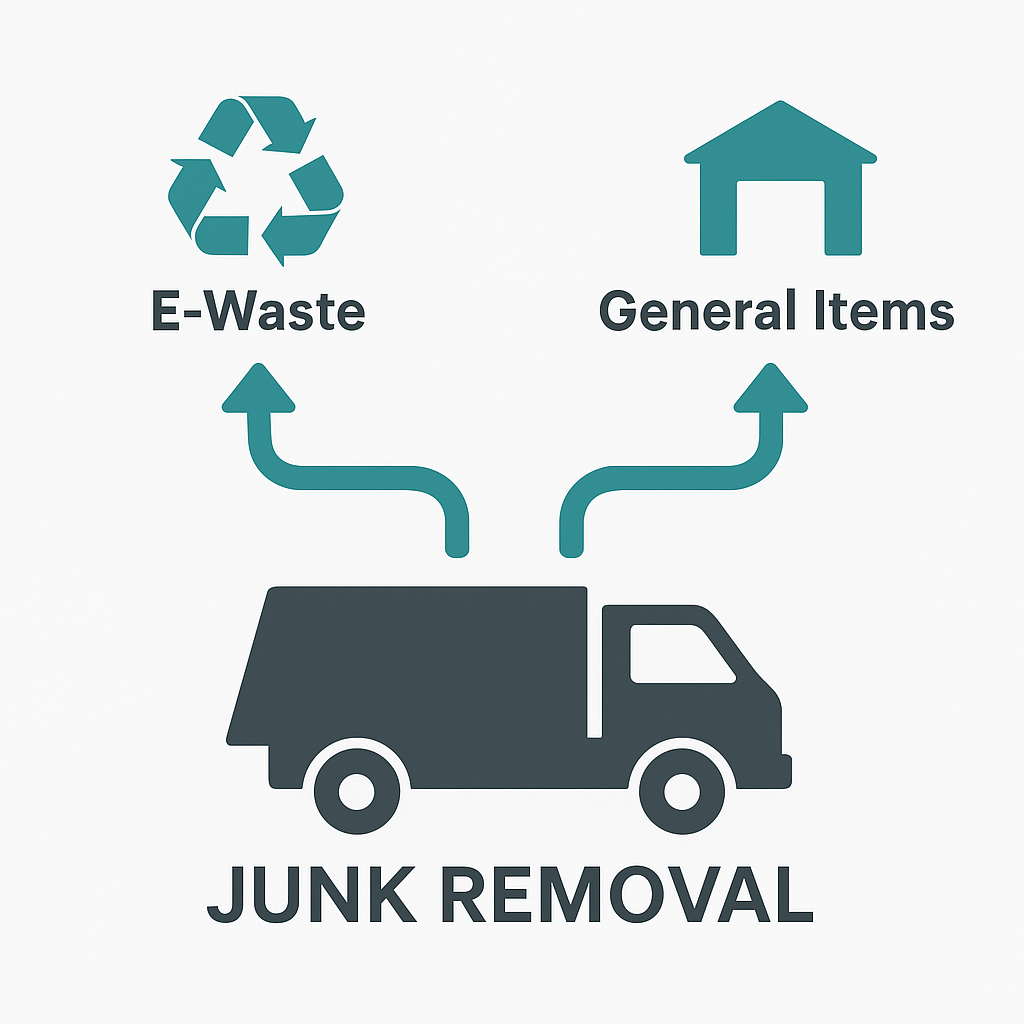
When our crew arrives for a cleanout in San Clemente or Aliso Viejo, we assess everything before loading. Electronics get sorted into their own category. We can’t legally dump a TV at the transfer station, so it needs to go to an e-waste recycler. This separation happens on-site or back at our facility, depending on the job size.
This is one reason why hiring day laborers for cleanouts creates problems beyond the obvious insurance and liability issues. Unlicensed haulers often don’t know—or don’t care—about e-waste regulations. That old monitor might end up in a dumpster behind a strip mall, creating potential liability that traces back to you as the property owner. We’ve seen it happen. Our disposal process includes documented e-waste handling precisely to avoid these situations.
The Hidden Cost of “Free” E-Waste Pickup
You’ll see ads for free e-waste pickup services. These can work well for specific situations, but understand the business model: they make money by extracting valuable materials from your electronics. Copper, gold, aluminum—there’s real value in that old computer.
The limitation? Free services cherry-pick. They want the desktop tower full of recyclable metals, not the water-damaged TV or the box of random cables. When you’re doing a full cleanout, “free” often means multiple appointments with different services, each taking only what benefits them. Sometimes paying for comprehensive removal saves time and hassle. If you’re clearing out old appliances alongside electronics, a single full-service haul often makes more sense than coordinating multiple specialty pickups.
What We Actually Do With Your Electronics
Transparency matters here. When we take e-waste during a cleanout, it goes to certified recyclers in the OC area. We maintain relationships with facilities that can document proper handling. For items with potential data—computers, phones, hard drives—we recommend you wipe them before we arrive or remove the drives entirely. We’re not a data destruction service, but we can point you toward resources if you need secure destruction.
The reality is that e-waste represents a small but important piece of most cleanouts. Getting it right protects you legally and keeps hazardous materials out of landfills. It’s one of those details that separates professional hauling from throwing stuff in a truck and hoping nobody notices.
If you’re planning a cleanout that includes electronics, schedule a free estimate and let us know what you’re dealing with. We’ll factor e-waste handling into the plan from the start.
Frequently Asked Questions
Can I put old electronics in my regular trash in Orange County?
No. California law specifically bans “covered electronic devices” including TVs, monitors, and laptops from landfills. Violating this can result in fines. Even items not explicitly covered, like small electronics, often contain materials that shouldn’t go to landfill. Use e-waste recycling options instead.
Do junk removal companies take TVs and computers?
Legitimate junk removal companies will take electronics as part of a larger cleanout, but they must handle them separately from regular debris. Ask any hauler how they dispose of e-waste before booking. If they can’t explain their process, that’s a red flag about overall compliance.
Where can I drop off batteries in Orange County?
Home improvement stores like Home Depot and Lowe’s typically have Call2Recycle collection boxes for rechargeable batteries. Household hazardous waste events also accept batteries. Never put lithium-ion batteries in any curbside bin—they’re a fire hazard at transfer stations.
Is e-waste pickup really free?
Some services offer free pickup for electronics with high scrap value—computers, servers, certain TVs. However, they typically won’t take everything. Damaged items, CRT monitors, and random cables often get rejected. For full cleanouts, paid comprehensive service usually proves more practical than coordinating multiple free pickups.
What happens if e-waste ends up in a landfill?
Materials like lead, mercury, and cadmium can leach into soil and groundwater. Beyond environmental damage, there’s legal liability—California tracks illegal e-waste disposal, and fines apply to both the person who discarded the item and potentially the property owner. Proper disposal protects you legally.
Can I recycle old cell phones in Orange County?
Yes. Most wireless carriers accept old phones for recycling regardless of brand or condition. Best Buy and Staples also accept phones. Before recycling, factory reset the device to remove personal data, or remove the SIM card at minimum. Some retailers offer trade-in credit for newer phones in good condition.
Ready to clear out electronics along with everything else? Give us a call at (714) 769-5070 and we’ll walk you through how we handle e-waste as part of your cleanout.
About the Author
Chris — Founder & Owner, United Junk Removal
Chris is the founder and owner of United Junk Removal, a locally owned Orange County junk removal company. A longtime Orange County resident, Chris spent years working in mortgage lending, debt consolidation, and financial restructuring before launching United Junk Removal with a single truck and a commitment to exceptional customer service. Today, the company serves homeowners and businesses throughout Orange County and is expanding into residential moving services. Chris writes about junk removal, moving, property cleanouts, and home service best practices based on his hands-on experience helping customers throughout Southern California.
2 Responses