


Key Takeaways
- Most garage decluttering fails because people start sorting items before clearing floor space—flip that sequence for success.
- The four-zone staging method (Keep, Donate, Haul, Hazmat) prevents decision fatigue and keeps momentum going.
- Orange County disposal rules vary by city—know your bulky pickup limits before you pile things on the curb.
- A half-day focused push beats spreading the project over weekends, because you lose momentum every time you stop.
- Call for junk removal near me when your Haul pile exceeds what fits in your car after two trips.
I’ve walked into hundreds of Orange County garages over the years. Some belong to homeowners in Irvine who haven’t parked inside since 2018. Others are packed estates in Mission Viejo where three generations of belongings got stacked floor to ceiling. Every single one of them has something in common: the owner started this project before and stopped partway through. That’s not a character flaw—it’s a strategy problem. Today I’m sharing the actual method we use when our crew tackles garage cleanouts, adapted so you can do it yourself or know exactly what help you need.
Why Do Most Garage Decluttering Projects Stall Out?
Most projects fail because people start with the stuff instead of the space. They pick up one box, open it, get nostalgic, and two hours later they’ve sorted twelve items while the garage looks exactly the same. Decision fatigue sets in fast when you’re making keep-or-toss choices on random objects without a system.
The fix? Clear the floor first. Move everything to one side of the garage—don’t sort yet, just relocate. That visible empty concrete gives you a staging area and, more importantly, a psychological win. You can actually see progress, which keeps you moving forward instead of spiraling into old photo albums.
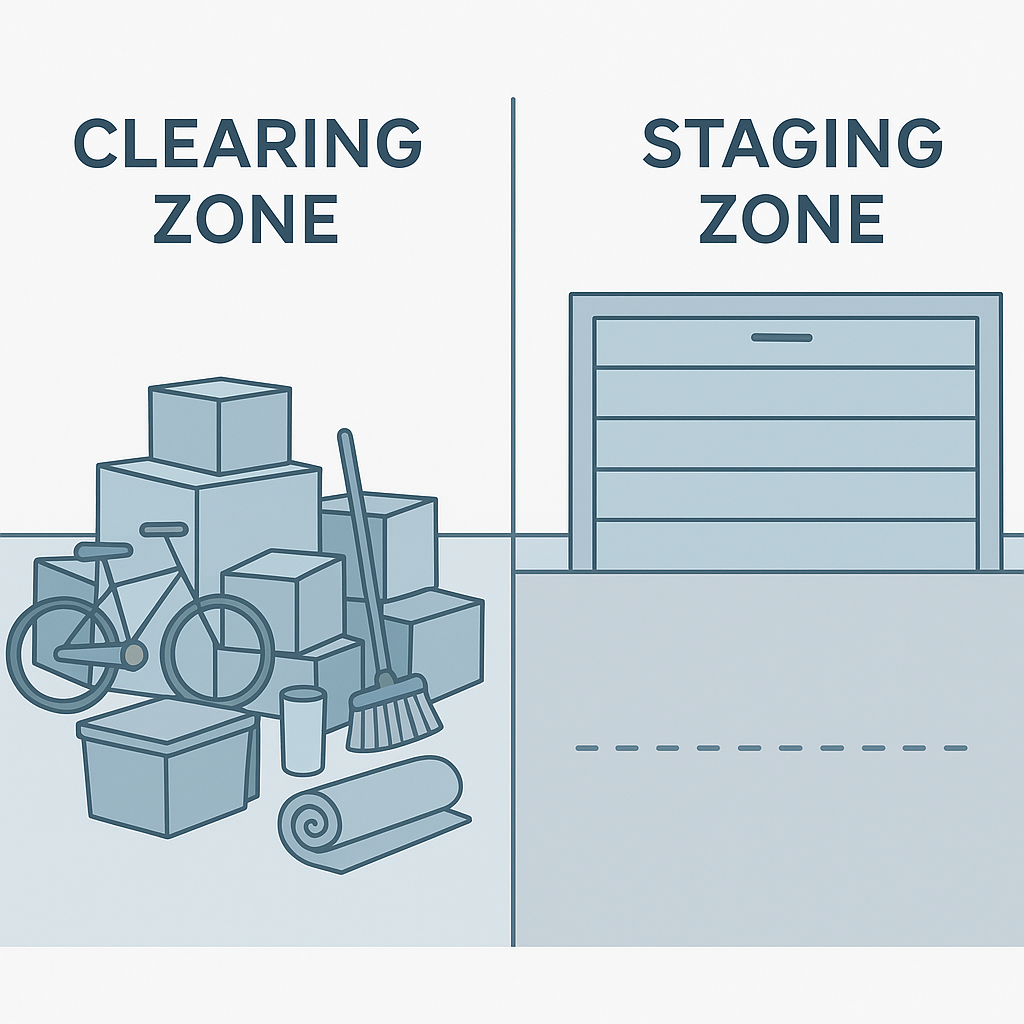
What Is the Four-Zone Staging Method?
Once you have clear floor space, set up four distinct zones with signs or tape. This prevents the endless “maybe pile” that kills momentum. Every item goes to one zone immediately after you touch it—no putting things down to “decide later.”
Zone 1: Keep
Items that stay in the garage. Be strict here. If you haven’t used it in two years and it’s not seasonal (holiday decorations, camping gear), it probably doesn’t belong in Keep. Everything in this zone gets reorganized on shelving or wall storage after the cleanout.
Zone 2: Donate
Working items someone else could use. Furniture in decent shape, sports equipment your kids outgrew, tools you duplicated. Local Goodwill locations in Fullerton and Laguna Niguel accept most household items during regular hours. Habitat for Humanity ReStores take building materials and working appliances if you’ve got those.
Zone 3: Haul
Broken, worn out, or genuinely garbage. This is your junk removal pile. Old mattresses, busted furniture, mystery boxes of tangled wires—anything that can’t be donated and won’t fit in your weekly trash pickup.
Zone 4: Hazmat
Paint cans, motor oil, pool chemicals, old propane tanks, batteries. Orange County has specific disposal requirements for these items. The county runs periodic household hazardous waste collection events, and some cities like Newport Beach have permanent drop-off locations. Don’t mix these with your regular Haul pile.

How Long Should a Garage Declutter Take?
For a typical two-car garage, plan on four to six hours of focused work. That’s actual sorting and moving time, not including the disposal runs afterward. I always tell homeowners: a single Saturday morning push works better than spreading it across three weekends.
Here’s why. Every time you stop and restart, you lose context. You forget what’s in the boxes you already sorted. You second-guess decisions you made last weekend. Momentum matters more than perfection in decluttering. Get it done in one sustained effort, then refine your organization over the following weeks.
If you’re dealing with an especially packed garage—or you’re sorting through a loved one’s belongings after a loss—that timeline extends. Estate cleanouts in particular need more time for the emotional weight involved. Don’t rush those.
What Happens to the Haul Pile?
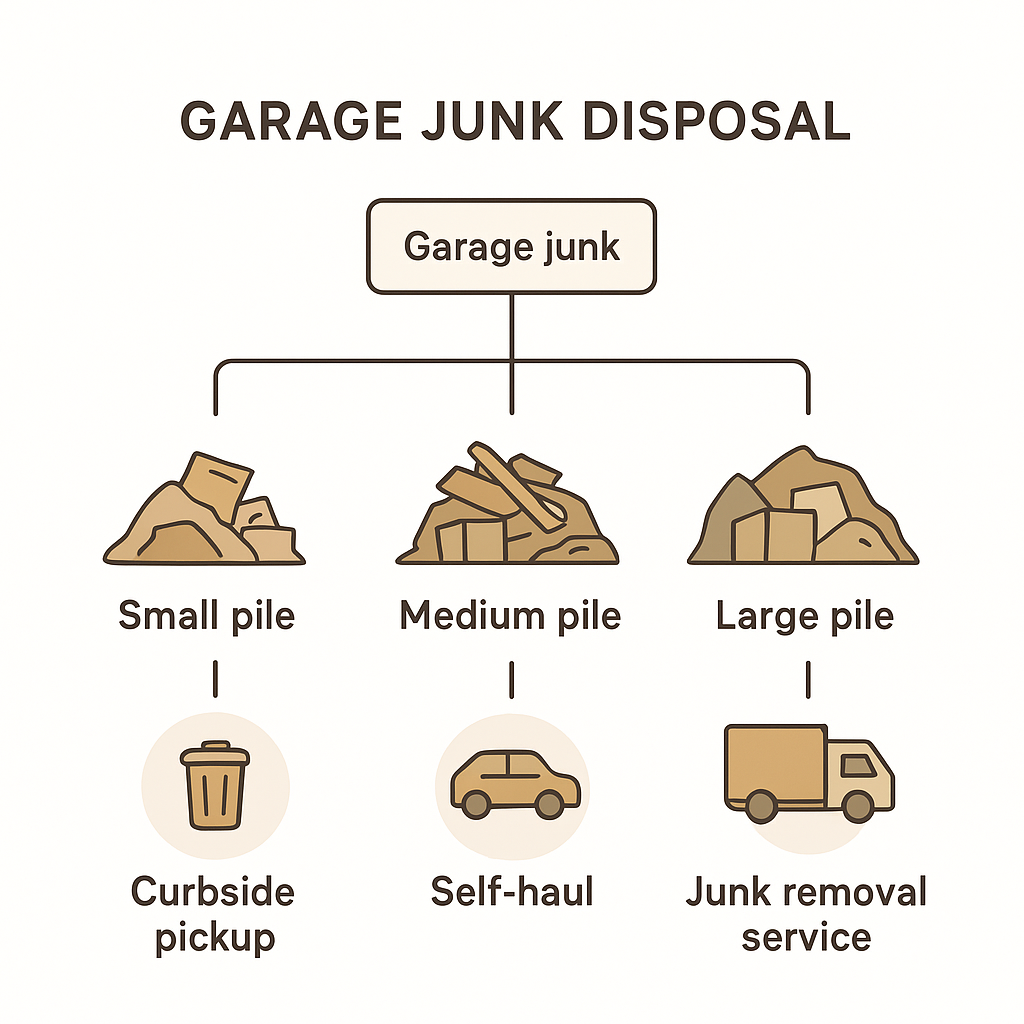
Your options depend on how much you’ve accumulated. For small amounts, your regular trash service might accept a few extra bags or one bulky item per week. Most OC cities have limits, though. Irvine residents get one free bulky pickup per quarter. Mission Viejo requires scheduling in advance. Check your city’s specific rules before assuming curbside works.
When the Haul pile exceeds what fits in your car after two trips to the dump, that’s usually the threshold where calling a junk removal service makes sense. We haul full garages regularly—the math often works out better than multiple dump runs when you factor in your time, dump fees, and the truck rental if your vehicle can’t handle it.
What About the Hazmat Zone?
California takes hazardous waste seriously, and Orange County enforces it. You can’t toss paint cans, batteries, pesticides, or old electronics in regular trash—those are e-waste and hazmat materials with specific disposal requirements.
The OC Waste & Recycling program runs collection events throughout the year at rotating locations. For electronics specifically, some retailers accept e-waste for free recycling. If you’ve got a garage full of old computers, TVs, or monitors, we can haul those to certified e-waste recyclers as part of a cleanout.
Motor oil and automotive fluids often get accepted at auto parts stores—call ahead to confirm. Pool chemicals are trickier and usually need the county hazmat events.
How Do You Keep the Garage Clear After Decluttering?
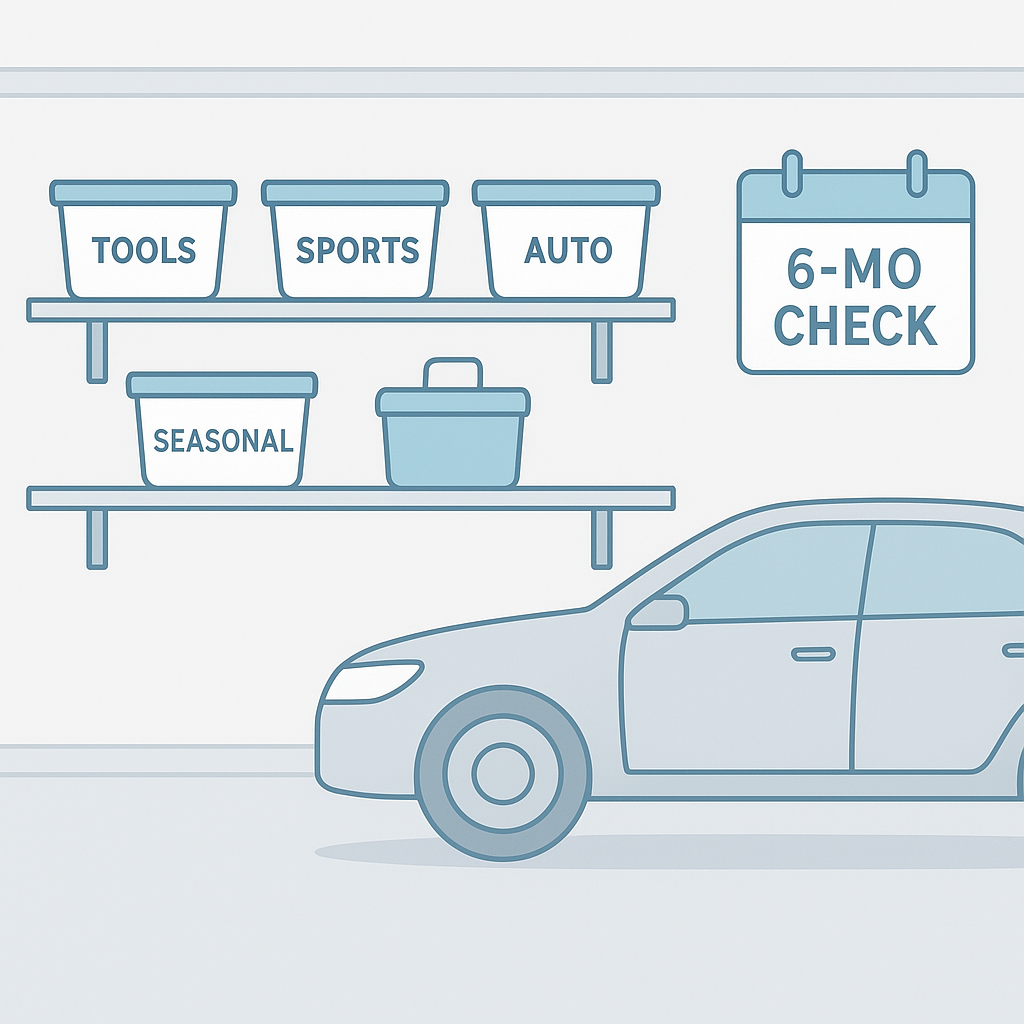
The secret isn’t better shelving (though that helps). It’s the one-in-one-out rule. Every time something new enters the garage, something else leaves. This prevents the slow accumulation that got you here in the first place.
Homeowners in Laguna Niguel and similar HOA communities often face pressure to keep garages parkable. That external accountability actually helps. If you know the garage has to stay clear enough for cars, you’re less likely to let boxes pile up.
Schedule a maintenance pass every six months. Not a full cleanout—just a quick sweep to catch items that snuck in and don’t belong. Thirty minutes twice a year prevents another six-hour project down the road.
Frequently Asked Questions
How do I decide what to keep in my garage?
Apply the two-year rule: if you haven’t used it in two years and it’s not seasonal (holiday items, camping gear, sports equipment for active hobbies), it probably doesn’t need garage space. Be honest about “someday” projects that never happen.
Can junk removal companies take everything from a garage cleanout?
Most items, yes. Furniture, appliances, boxes, sporting goods, and general debris all go. Hazardous materials like paint, chemicals, and propane require separate disposal through county programs. Reputable haulers will tell you upfront what they can and can’t take.
What’s the best day to schedule a garage cleanout?
Saturday mornings work well because donation centers are open and you have daylight hours to finish. Avoid holiday weekends when disposal sites may have reduced hours. If you’re booking junk removal in Orange County, weekday mornings often have better availability.
How much space should I leave in my garage?
At minimum, leave enough clear floor space to walk around and access stored items without moving other things first. Ideally, a two-car garage should fit at least one car plus organized wall storage. If you’re in an HOA area, check your CC&Rs—some require vehicles parked inside.
Should I rent a dumpster or hire a junk removal service?
Dumpsters work well if you need multiple days to sort and can load everything yourself. Junk removal services make sense for single-day cleanouts where you want help with the heavy lifting and don’t want a container sitting in your driveway. For most garage cleanouts, a truck-based haul-away is faster and often comparable in cost.
What if I find valuable items while decluttering?
Set those aside in a separate “Sell” area if you have time for estate sales, online listings, or consignment. If speed matters more than maximum recovery, donation gets you a tax receipt and clears the space faster. We see homeowners stall projects trying to sell things—sometimes faster is better.
Ready to clear that garage for good? Schedule a free estimate and we’ll handle the Haul pile while you focus on what stays.
About the Author
Chris — Founder & Owner, United Junk Removal
Chris is the founder and owner of United Junk Removal, a locally owned Orange County junk removal company. A longtime Orange County resident, Chris spent years working in mortgage lending, debt consolidation, and financial restructuring before launching United Junk Removal with a single truck and a commitment to exceptional customer service. Today, the company serves homeowners and businesses throughout Orange County and is expanding into residential moving services. Chris writes about junk removal, moving, property cleanouts, and home service best practices based on his hands-on experience helping customers throughout Southern California.