


Key Takeaways
- Hazardous materials like paint, batteries, and chemicals are universally banned from dumpsters and can trigger fines for the renter.
- Appliances containing refrigerants (fridges, AC units, freezers) require certified removal before disposal—tossing them in violates federal law.
- Electronics, tires, and medical waste have separate disposal streams in Orange County and won’t be accepted in standard containers.
- Mattresses and certain bulky items may be allowed but often incur extra fees depending on your hauler’s policies.
- Mixing prohibited items into a load can result in rejection at the transfer station, leaving you stuck with a full dumpster and additional charges.
I’ve been hauling junk across Orange County long enough to know this scenario: someone rents a dumpster for a cleanout, tosses everything in, and then gets a call about extra charges or a rejected load. The frustration is real. Dumpster rules exist because transfer stations and landfills have strict regulations about what enters their facilities. Understanding these rules upfront saves you money, delays, and headaches. Here’s what we’ve learned from years of navigating Orange County disposal requirements.
Why Do Dumpsters Have Prohibited Items?
Dumpster restrictions protect the environment, worker safety, and facility equipment. Transfer stations across Orange County screen incoming loads, and prohibited materials can contaminate entire batches of recyclables or damage processing equipment. When haulers get caught with banned items, the costs flow back to the customer.
California regulations are stricter than many states. Our landfills and recycling facilities operate under specific permits that limit what they can accept. Items containing hazardous chemicals, refrigerants, or infectious materials require specialized handling that general waste facilities aren’t equipped to provide. This isn’t arbitrary—it’s compliance with state and federal environmental law.
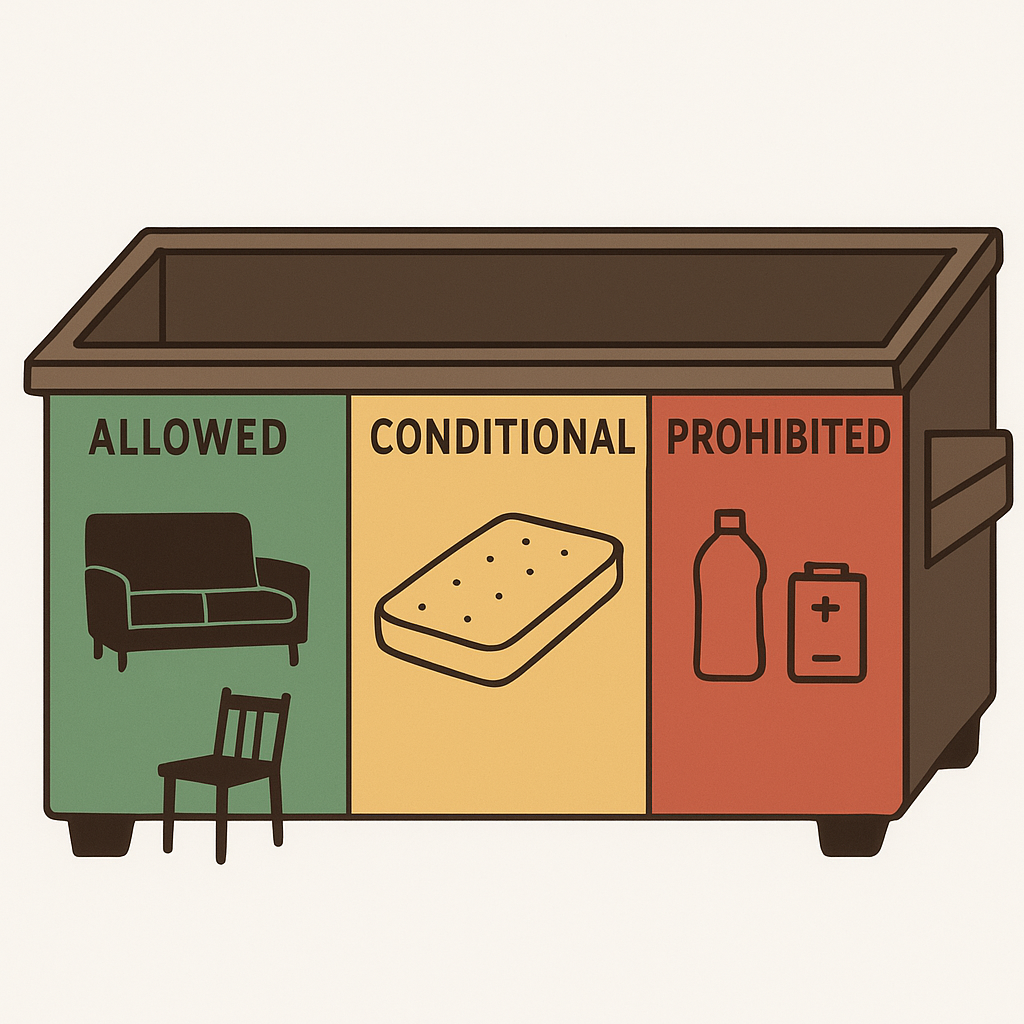
What Items Are Banned From Dumpsters in Orange County?
Certain materials are universally prohibited regardless of which hauler you use or where in Orange County you’re located. These items require alternative disposal methods, and ignoring the rules creates liability for everyone involved.
Hazardous Household Chemicals
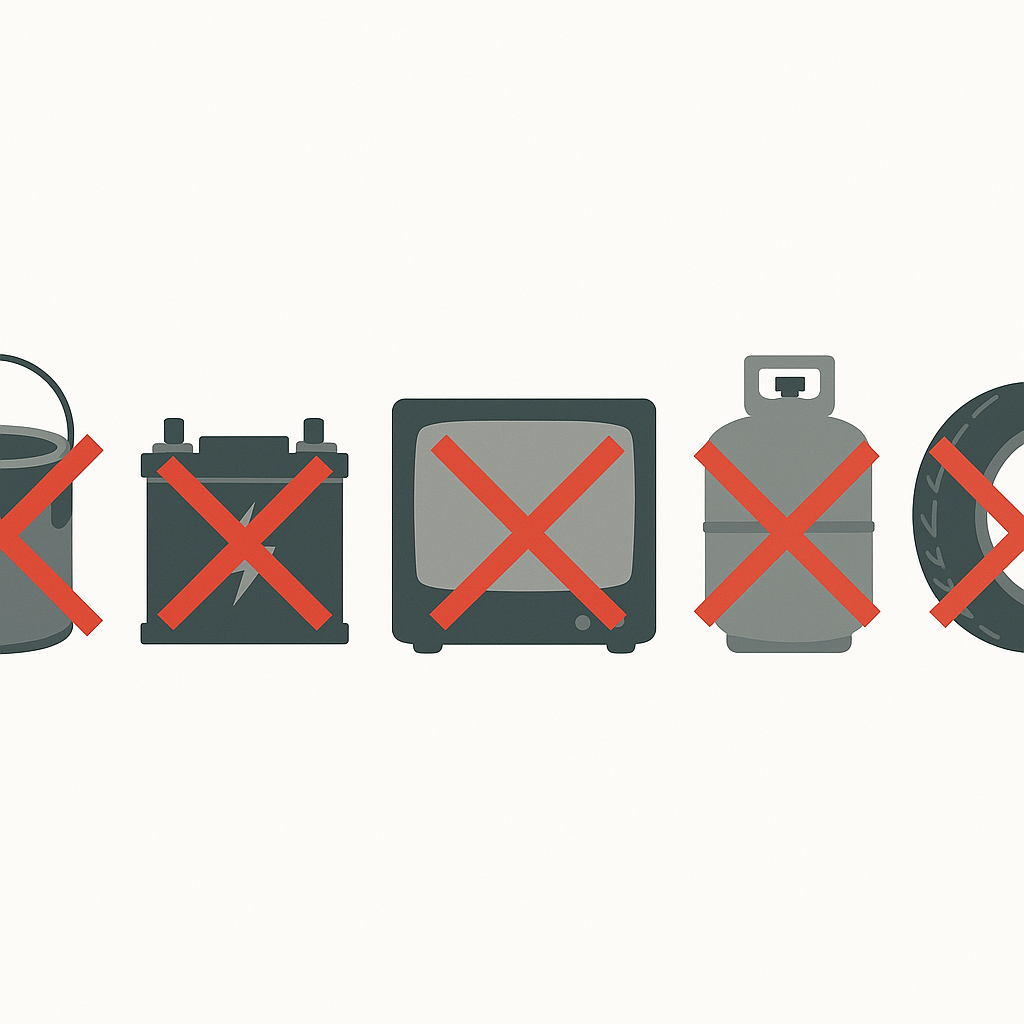
Paint, solvents, pesticides, pool chemicals, and cleaning products with warning labels cannot go in dumpsters. In cities like Irvine and Newport Beach, homeowners often accumulate these items in garages over years. Orange County operates household hazardous waste collection sites that accept these materials for free—use them instead of risking contamination fines.
Appliances With Refrigerants
Refrigerators, freezers, air conditioning units, and dehumidifiers contain refrigerants that require certified evacuation before disposal. Federal law mandates proper handling of these substances. If you’re clearing out a garage in Lake Forest or a rental property in Huntington Beach, plan ahead for these items. We’ve written extensively about appliance disposal options in Orange County that keep you compliant.
Electronics and E-Waste
Televisions, computers, monitors, and most devices with circuit boards are classified as e-waste in California. These items contain lead, mercury, and other materials that require specialized recycling. For details on where these actually go, our e-waste disposal guide breaks down the local options.
Batteries of All Types
Car batteries, lithium-ion batteries, and even standard household batteries are prohibited. Lithium batteries pose fire risks during transport and processing—we’ve seen transfer stations refuse entire loads because of a single laptop battery buried in the debris.
Tires
Tires are banned from most dumpsters because they don’t compact, create air pockets in landfills, and breed mosquitoes when they collect water. Tire retailers typically accept old tires when you purchase new ones, and Orange County has designated drop-off locations.
Medical and Biohazard Waste
Sharps, prescription medications, and anything contaminated with blood or bodily fluids requires specialized disposal. Pharmacies and hospitals have take-back programs for medications. Medical waste from home health care needs proper containers and licensed pickup.
Propane Tanks and Pressurized Containers
Propane tanks, aerosol cans that aren’t completely empty, and fire extinguishers can explode under pressure. Transfer station workers have been injured by improperly disposed pressurized containers, which is why these face strict bans.
Conditional Items That May Incur Extra Fees
Some items fall into a gray zone—technically acceptable but subject to surcharges or specific handling requirements. Mattresses are the most common example. California’s mattress recycling law means these items often carry per-unit fees regardless of how you dispose of them. If you’re dealing with multiple mattresses during an estate cleanout in Mission Viejo, factor this into your budget.
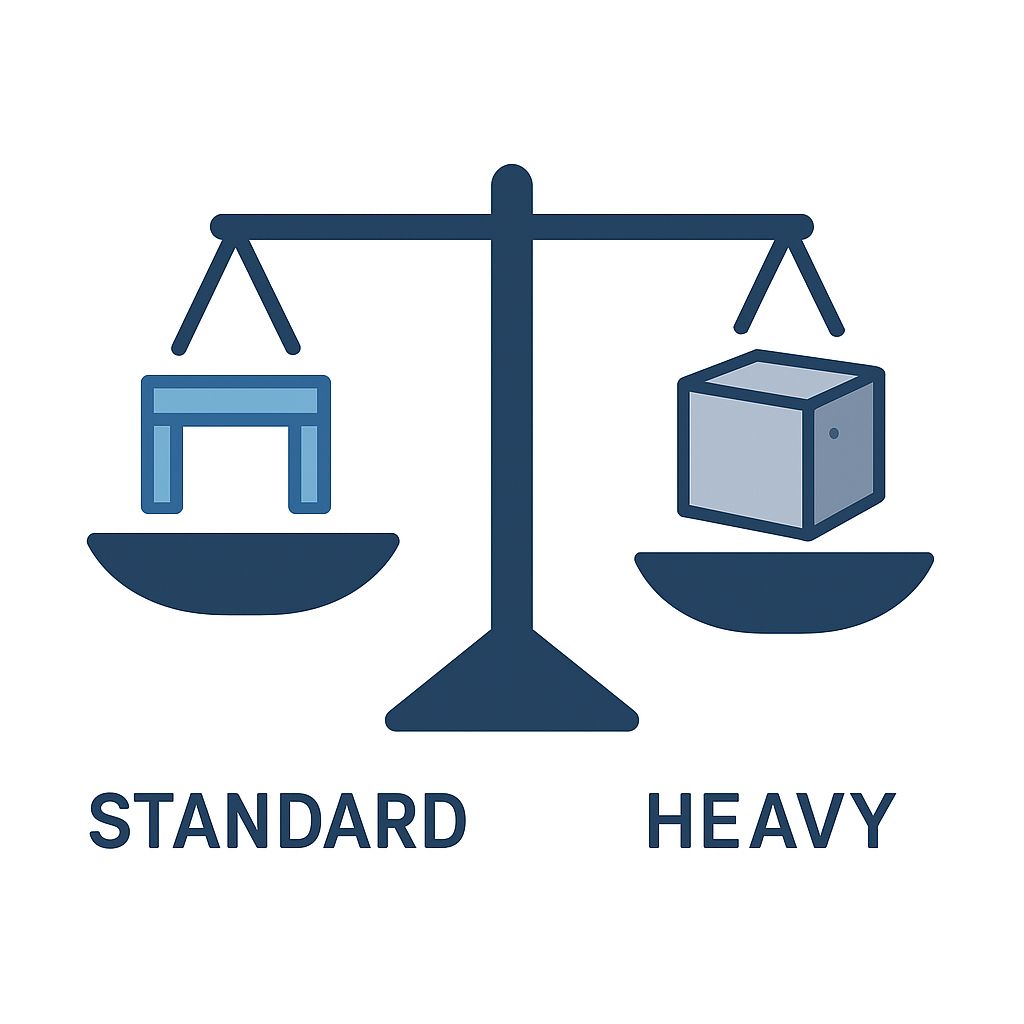
Concrete, dirt, and heavy construction materials may be allowed in limited quantities but can trigger overage charges if they exceed weight limits. A dumpster rated for household debris can’t handle a patio demolition’s worth of concrete without consequences.
What Happens When Prohibited Items Get Dumped Anyway?
Transfer stations inspect incoming loads. When they find prohibited materials, several outcomes are possible—and none of them are good for the customer. The load may be rejected entirely, meaning the dumpster returns full and you start over. Alternatively, the facility may accept the load but charge hazardous material handling fees that get passed directly to you.
In serious cases, improper disposal can trigger regulatory fines. California takes environmental violations seriously, and ignorance isn’t a defense when your name is on the rental agreement. We’ve seen customers face unexpected charges because someone tossed a half-full paint can into what was supposed to be a straightforward garage cleanout.
How Professional Junk Removal Handles Prohibited Items Differently
When you hire a junk removal company instead of renting a dumpster, sorting becomes our responsibility. We know which facilities accept what, which items need special handling, and how to route materials appropriately. That old refrigerator in your garage doesn’t become your compliance problem—it becomes ours.
Our team handles the separation at pickup. We’ve built relationships with recyclers, donation centers, and specialty disposal facilities across Orange County. Items that would get rejected at a transfer station go to the right place without creating headaches for you. This is one of the genuine advantages of full-service junk removal over DIY dumpster rental.
Frequently Asked Questions
Can I put a mattress in a dumpster?
Often yes, but expect a surcharge. California’s mattress recycling program means these items carry fees regardless of disposal method. Some haulers prohibit them entirely while others charge per-unit rates. Ask before you toss.
What happens if I accidentally throw hazardous waste in a dumpster?
The transfer station may reject the entire load or accept it with additional hazardous handling fees. In either case, you’re responsible for the extra costs. Serious violations can also trigger regulatory penalties under California environmental law.
Are construction materials allowed in residential dumpsters?
Light construction debris like drywall, wood, and roofing materials typically are allowed. However, concrete, brick, and dirt are heavy materials that can exceed weight limits quickly, triggering overage charges. Some haulers restrict these entirely for residential rentals.
Where can I dispose of paint in Orange County?
Orange County operates household hazardous waste collection sites that accept paint for free. Many paint retailers also participate in take-back programs. Never pour paint down drains or toss cans in regular trash or dumpsters.
Can I put an old TV in a dumpster?
No. Televisions and monitors are classified as e-waste in California and require specialized recycling. Retailers, e-waste events, and dedicated collection facilities are the proper disposal channels.
Do junk removal companies take prohibited items that dumpsters won’t?
Yes—with proper handling. Professional haulers like us know which facilities accept specific materials and can route items appropriately. Refrigerants get evacuated, e-waste goes to certified recyclers, and hazardous materials reach approved facilities. The sorting happens on our end, not yours.
Navigating disposal rules shouldn’t require a compliance degree. If you’ve got a cleanout coming up and want to skip the prohibited-item headaches entirely, schedule a free estimate and we’ll handle the sorting for you.
About the Author
Chris — Founder & Owner, United Junk Removal
Chris is the founder and owner of United Junk Removal, a locally owned Orange County junk removal company. A longtime Orange County resident, Chris spent years working in mortgage lending, debt consolidation, and financial restructuring before launching United Junk Removal with a single truck and a commitment to exceptional customer service. Today, the company serves homeowners and businesses throughout Orange County and is expanding into residential moving services. Chris writes about junk removal, moving, property cleanouts, and home service best practices based on his hands-on experience helping customers throughout Southern California.